
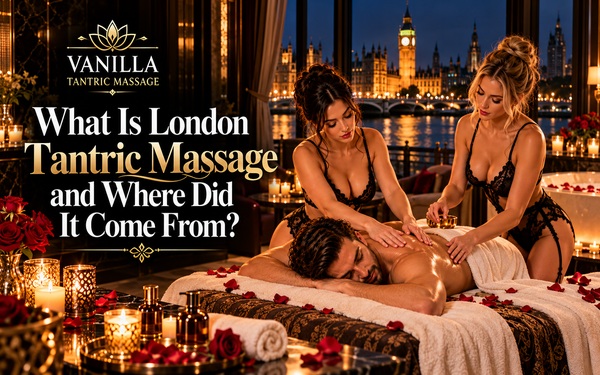
Tantric massage is now one of London’s most searched-for relaxation experiences. Many people book a session without knowing much about where the practice comes from or what makes it different from an ordinary massage, though. Understanding the roots of tantra helps you appreciate what a genuine London Tantric session is designed to do, and helps you spot the difference between the real thing and a simple rebrand.
What Does “Tantra” Mean?
The word “tantra” comes from Sanskrit. It is often translated as “loom” or “weave”, and is sometimes explained as “to expand” or “to liberate”. The image of weaving reflects one of tantra’s central ideas: that body, mind and spirit are not separate, but threads of one connected whole.The Origins of Tantra
Tantra developed in India within both Hindu and Buddhist traditions. Its foundational texts, known as the Tantras, are generally dated to roughly the mid-first millennium CE. Over the following centuries the tradition spread across South Asia, Tibet and beyond. Traditional tantra was a broad spiritual path. It included meditation, breathwork, ritual, mantra and practices designed to expand awareness. Unlike some traditions that saw the body as an obstacle, tantra treated physical experience as a path to awareness rather than something to be denied.How Tantra Reached the West
In the 20th century, Western writers and teachers began adapting tantric ideas for modern audiences. This movement, often called neo-tantra, became especially popular from the 1960s and 1970s onwards. It focused on the elements most accessible to Western audiences:- Conscious, slow breathing
- Mindful, unhurried touch
- Full-body awareness
- Connection and presence
London Tantric Massage Today
In a city as fast-paced as London, tantric massage has found a natural audience. Busy professionals, travellers and curious first-timers book sessions to slow down, switch off and reconnect with their bodies.
A modern London Tantric session usually brings together four core elements:
| Principle | What it means in a session |
|---|---|
| Breath | Slow, guided breathing helps the body relax and the mind settle |
| Slowness | Long, flowing strokes replace quick, targeted pressure |
| Awareness | Attention stays on sensation rather than racing thoughts |
| Connection | A consultation and agreed boundaries build trust from the start |
How Is Tantric Massage Different From a Regular Massage?
A regular massage focuses on muscles, working out knots and tension one area at a time. A tantric massage works on the whole person. The pace is deliberately slow, the breath is central, and the aim is deep relaxation and heightened awareness rather than purely physical treatment. Research on massage and caring touch shows that slow, rhythmic contact can help lower cortisol, the body’s main stress hormone. That is one reason many guests describe tantric massage as a “reset button” for body and mind.Traditional Styles You Can Still Experience
Some modern sessions stay close to traditional tantric ideas. A Lingam Massage London session, for example, follows a slow, ritual-led approach rooted in the tantric respect for male energy. For a gentler introduction, many first-time guests begin with a sensual massage London session before trying a full tantric ritual.Where to Experience Tantric Massage in London
Tantric massage is available across Central London, in private residences or as outcall to hotels. Popular areas include Marylebone, Mayfair, Paddington and Kensington. Guests visiting the museums often choose an erotic massage South Kensington session to unwind after a day on Exhibition Road.How to Tell an Authentic Tantric Session
- The provider explains tantra, not just the word.
- Every session begins with a consultation and agreed boundaries.
- Breathwork is part of the session, not an afterthought.
- The pace is slow, and sessions last at least 60 minutes.
- The setting is calm, private and carefully prepared.